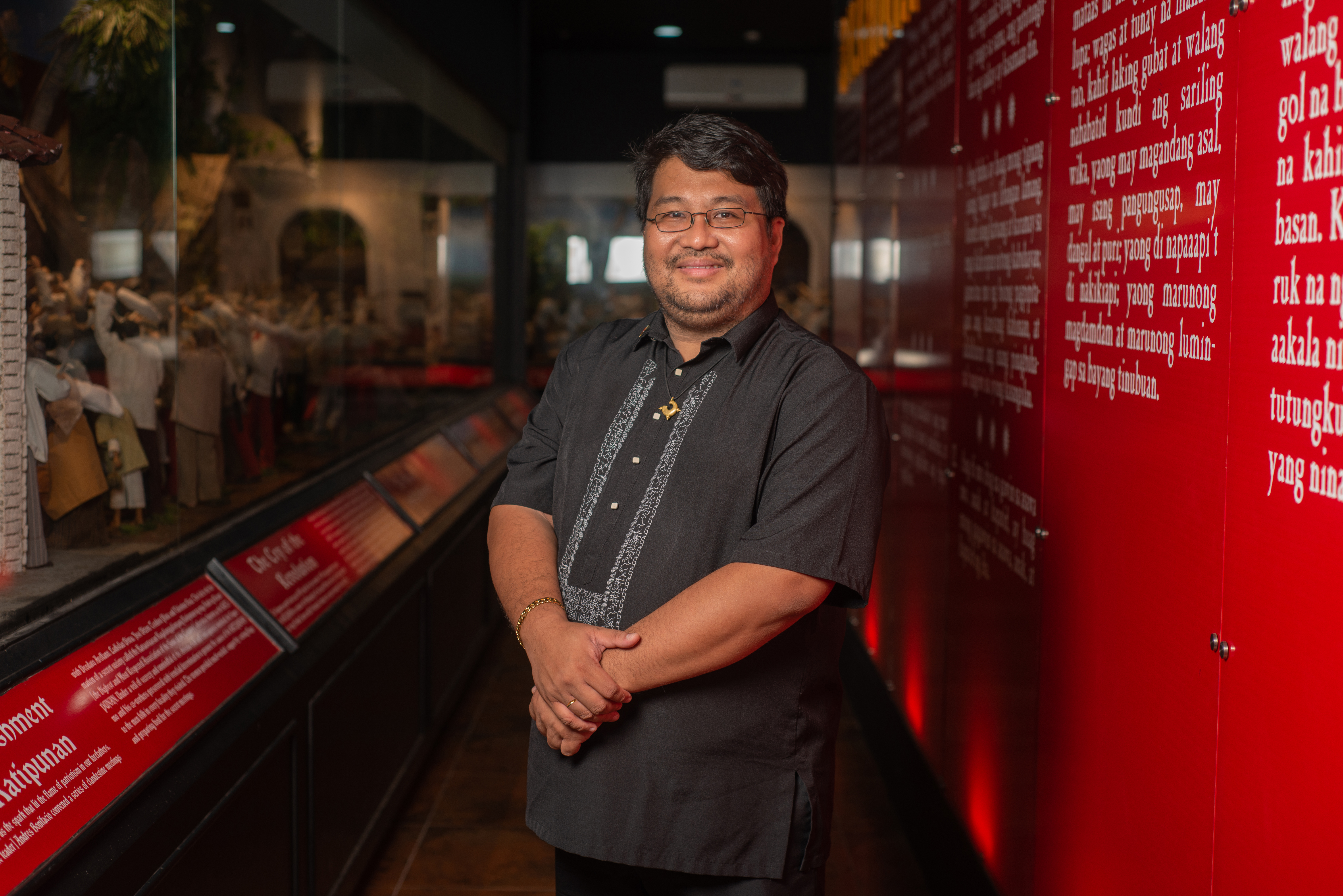
Prof. Michael Charleston “Xiao” Chua, Ph.D., Historian (COS), National Library of the Philippines
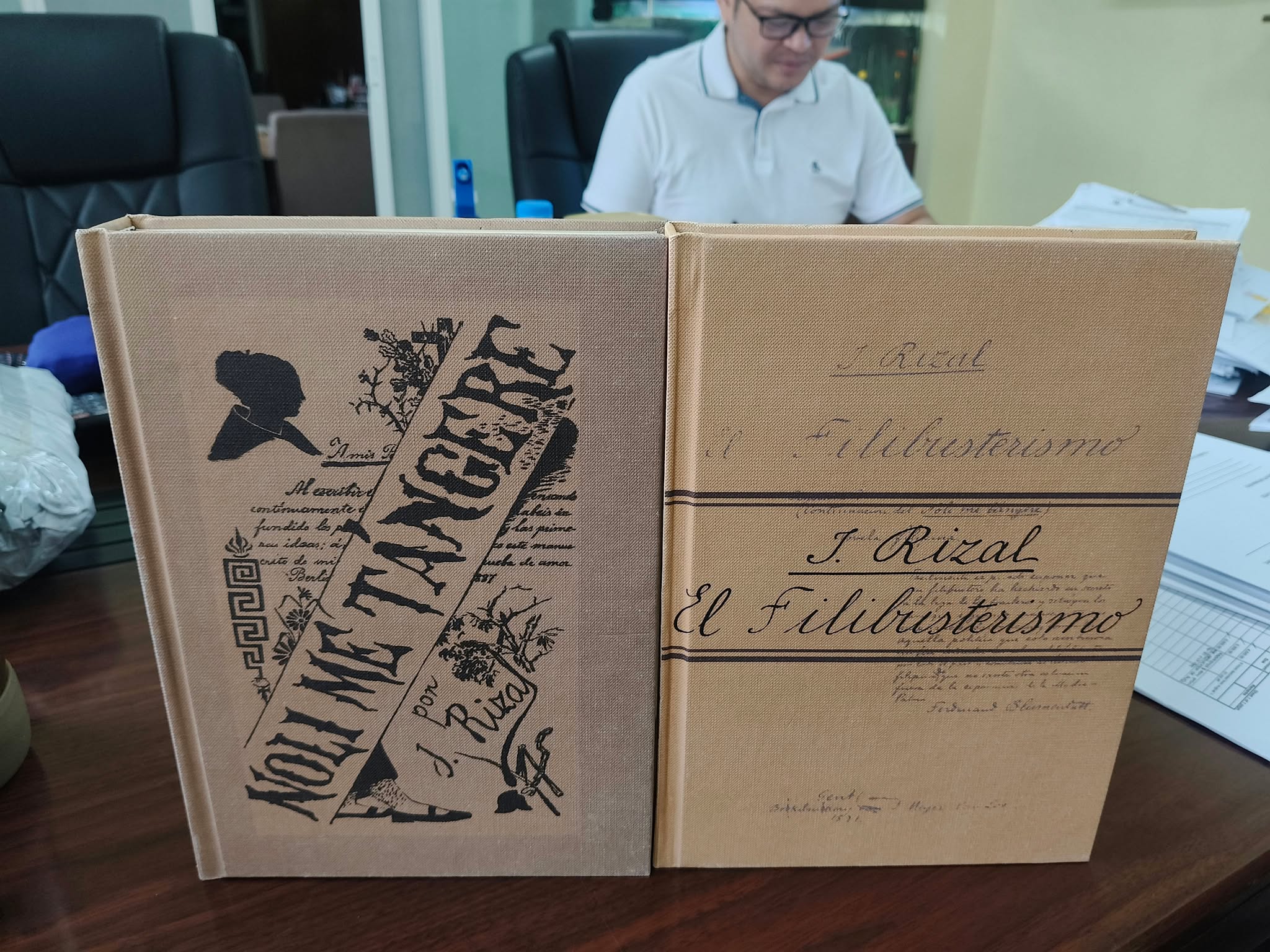
José Rizal’s El Filibusterismo is a sequel to his first novel, Noli me Tangere, which Penguin Classics declared as the first major artistic manifestation of Asian resistance against European colonialism. Hence, both are important not only in the formation and imagineering of the Filipino nation but also in the story of anti-colonial and anti -imperialist struggle in our continent.
According to Floro Quibuyen, in his book A Nation Aborted: Rizal, American Hegemony and Philippine Nationalism, when Rizal was asked by his brother Paciano to go to Spain in 1882, he was told by his brother that “the principal purpose” of his trip was not just “to finish this [medical] course but to study other things of greater usefulness.” This implies that the creation of a study or a work representing the past and the present of the islands at that time was their main objective. Hence, the Noli, the El Fili and the historical annotations to the Sucesos de la Islas Filipinas of Antonio de Morga were really the fulfillment of Rizal’s dream project.
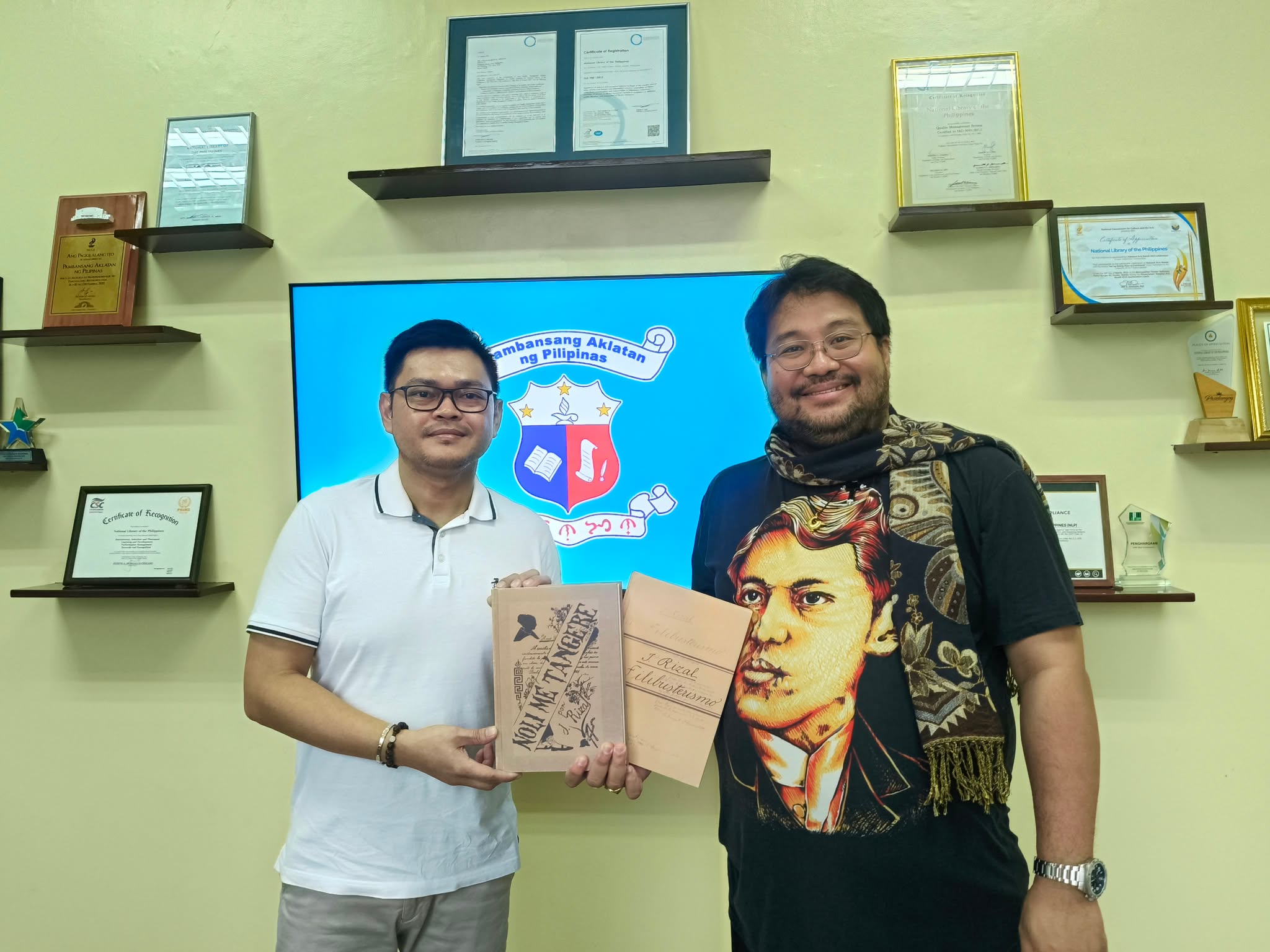
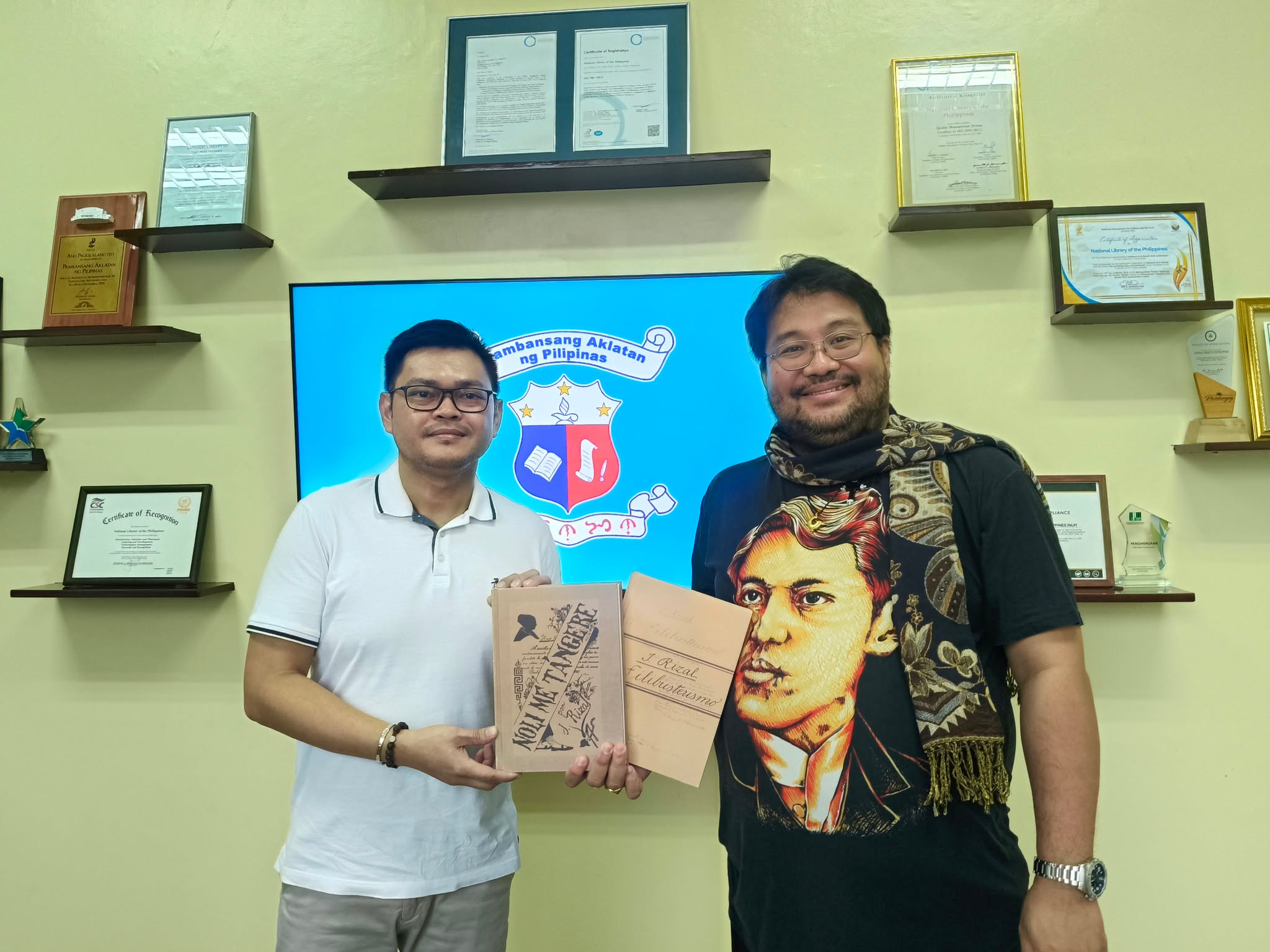
To underscore the importance of these works, the first edition of the annotations to the Morga, and the original manuscripts of the Noli me Tangere, the El Filibusterismo and the “Mi Ultimo Adios” (Rizal’s last farewell) along with the Proclamation of Independence, the Trial of Andres Bonifacio and the 1734 Murillo-Velarde Philippine Map, are now displayed at the National Library of the Philippines Permanent Gallery which came to life as an initiative of the NLP Director Cesar Gilbert “Jet” Q. Adriano in 2024.
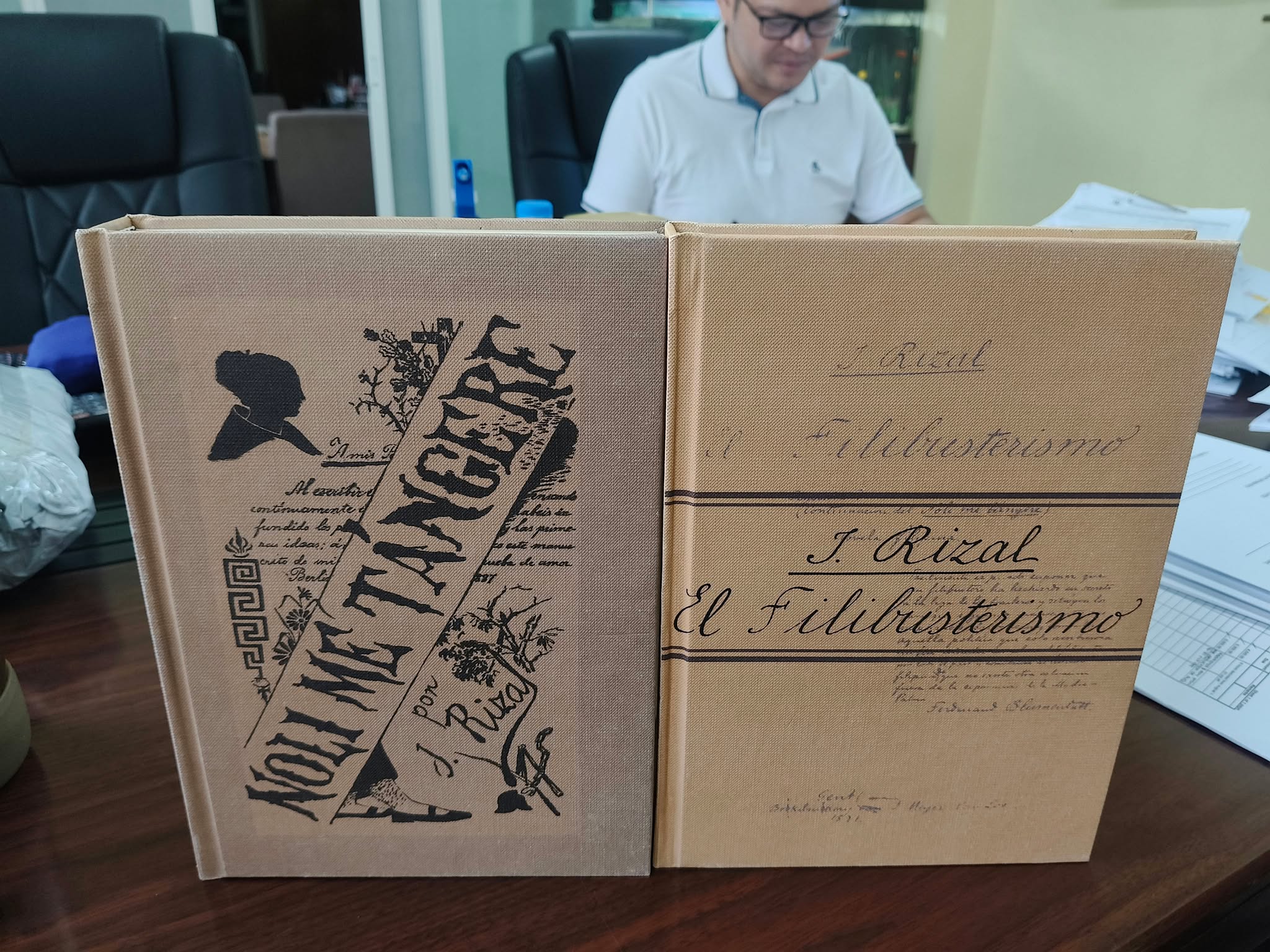
The historian Augusto de Viana pointed to me that looking at the manuscript of the Noli, one may notice Rizal’s signature handwriting was still flowing. To cut the cost of printing, he placed lines on the side of the ejected manuscript on Elias and his lover Salome, but still readable. The story was more playful, more satirical. But the manuscript of the El Fili tells a different story, the flowing handwriting had become more pointed. At first, perhaps knowing he will have lots of paper, he was just using the front side. Eventually, he will use the back pages and will have so many ink erasures in the text, many times whole pages, that will not be easily recoverable. It was an angrier novel, owing to the context of the Rizal family’s expulsion from the Calamba friar land in 1890, and the lack of funds owing to friends who promised support for the writing of the novel but did not fulfill them. His depression often makes him want to burn the manuscript but the novel was saved by the financial help of his Kapampangan friend Valentin Ventura and the novel was published in Ghent, Belgium in 1891.
Crisostomo Ibarra, Noli me Tangere’s protagonist, re-emerged as Simoun in the El Filibusterismo. His main goal is to agitate the people to rise up against the Spanish colonizers, hence the term “filibuster” which in the Spanish colonial context meant a rebel. Simoun eventually failed and this was read by many as Rizal’s warning against a revolution, being a reformer and a pacifist. That the Fili was an anti-revolution novel. But reading José Alejandrino’s memoir The Price of Freedom, Rizal perhaps had a different message. Being his roommate in Belgium while finishing the novel, Rizal reportedly told him, “…I regret having killed Elias instead of Crisostomo Ibarra; but when I wrote the Noli Me Tangere, my health was badly broken and I never thought that I would be able to write its sequel and speak of a revolution. Otherwise, I would have preserved the life of Elias, who was a noble character, patriotic, self-denying and disinterested— necessary qualities of a man who leads a revolution—whereas Crisostomo Ibarra was an egoist who only decided to provoke the rebellion when he was hurt in his interests, his person, his loves and all other things he held sacred. With men like him, success cannot be expected in their undertakings.” Rizal was not totally anti-revolution. As Rizal’s great grandniece Gemma Cruz Araneta puts it, “It is a novel on how not to wage a revolution” if it is only about selfish interests.
The public historian José Victor Torres had another insight from his paper “A la Juventud de Filibusteros” (an allusion to Rizal’s poem “A la juventud Filipina”), that the author may be alluding to another revolution in the title of the novel, not a bloody one, but the one initiated by young people in the universities like Basilio and Isagani. A peaceful revolution through education.
But Rizal, through Simoun, had a warning: “A, kayong mga kabataan! Nanaginip pa rin kayo! …Gusto n’yong maging mga Kastila din kayo, pero hindi n’yo nakikitang ang pinapatay n’yo ay ang inyong pagkabansa! Ano ang inyong magiging kinabukasan? Isang bansang walang pagkatao at kalayaan? Lahat sa inyo ay hiniram, pati na ang inyong mga depekto. Mamamatay kayo bago pa man dumating ang inyong kamatayan!”
It should be a truly Filipino education that make us love our country, love that will make us give our efforts for her, as Rizal wrote in this novel, “It is a useless life that is not consecrated to a great ideal. It is like a stone wasted on the field without becoming part of any edifice.”
May the pages of this facsimile copy inspire you to contribute a stone to the edifice of the nation, just like Rizal did.
Prof. Michael Charleston “Xiao” Chua, Ph.D., Historian (COS), National Library of the Philippines
The National Library of the Philippines is delighted to present to the nation a more affordable facsimile copy of one of our greatest documents, José Rizal’s original manuscript of the Noli Me Tangere, which is in the possession of this institution and through the initiative of the NLP Director Cesar Gilbert “Jet” Q. Adriano is now displayed in the new NLP Permanent Gallery along with other important documents of our nationhood.
Penguin Classics dubbed the novel as the first major artistic manifestation of Asian resistance against European colonialism. But many credited the novel, and its creation, as one of those that helped us become a nation. According to Setsuho Ikehata and Benedict Anderson, Rizal helped the indios throughout the archipelago realize they had a common misfortune. They may not have read the novels themselves, but those who did told others about Ibarra, Maria Clara, Elias, Sisa, Crispin and Basilio, Padre Salvi, Padre Damaso, Doña Victorina, and others.
From being mere Tagalogs, Cebuanos, Ilocanos, Kapampangans, Bicolanos, etcetera, we developed a common national sentiment and were able to identify with each other and finally see our problems in our own lens, which eventually united us and urged us to fight.
Rizal went to Europe in 1882 to actually fulfill a dream project that would write about the culture and history of the Philippines with his friends, the ilustrados. But them seem to not be interested. Frustrated, by the end of 1884, Rizal embarked on fulfilling the mission himself. He had already begun writing what would become his first novel in Madrid, then in Paris in 1885 and then in Wilhelmsfeld, Germany, by April to June 1886. He made in the Noli a study of the contemporary society of that time and fictionalized it. There was the story of a bell-ringer who was reportedly killed under the care of Father Antonio Piernavieja’s sacristan in San Rafael, Bulacan, which became the story of Crispin. There was the story of a bell-ringer who was reportedly killed under the care Father Antonio Piernavieja, which became the story of Crispin. There was also the story of Sor Josefa Estrada de San Rafael of San Simon, Pampanga, who, in 1881, was seen at the top of the Franciscan Abbey of Sta. Clara in Manila after she was molested by a priest. This became the “mad nun” at the postscript of the novel, believed to be Maria Clara.
But although the characters were caricatures, they reflected the reality of the ill effects of colonialism, demonstrating the role of the artist and social scientist in the making of the nation. Hoping it would help change people’s minds.
In Berlin, he struggled to correct his manuscript in the midst of winter. He felt sick and thought he had tuberculosis. By Christmas, Dr. Maximo Viola came and examined him and concluded that Rizal’s assumptions were wrong. Rizal was only undernourished.
Aside from his health, Rizal worried about how he could pay for the printing of his book. He asked his brother Paciano for 300 pesos for the printing, but it all went to food and lodging. In a letter to a friend, he said later that he did not believe his book would ever be published. “I was on the point of throwing my work into the fire as a thing accursed and fit only to die,” he wrote.
Viola, who gave the depressed man some money for his expenses, also offered to pay for the whole cost of printing 2,000 copies to a reluctant Rizal. He finally agreed to accept 300 pesos as a loan rather than a gift.
At the cost of a lot of personal sacrifices on the part of the author, the Noli Me Tangere was published on March 21, 1887 in Berlin. The first copies were sent to the author’s friends and was received well. He was only 25 years old.
But the person who could be considered the first external reviewer of his self-published work was the printer’s man himself. Rizal’s biographer Austin Coates wrote: “Though no one in the printing house spoke proper Spanish, they had realized that the work they were producing was dynamite. To Rizal and Viola, the printer’s man expressed the view that if the author of the book were to go back to the Philippines his fate would certainly be—and he drew his hand across his gullet.” After nine years, Rizal was executed by the Spaniards.
Looking at the manuscript itself tells us a few more contexts: Ambeth Ocampo said that the signatures you will see at the side of the pages of manuscript would remind us of the role of German women in transcribing it for printing. To also cut cost, he did not include one chapter in the publication—“Elias and Salome”—but is still here, indicated by long lines in the side of its pages.
In 1912, an English translation of the novel by Charles Derbyshire was named The Social Cancer and not the literal translation of the Latin, “Touch me not.” Rizal wrote Félix Resurrección Hidalgo in 1887 saying that the title Noli me Tangere were taken from the Gospels. But what is it not to be touched? Rizal’s dedication for his country reads, “Recorded in the history of human suffering are cancers of such malignant character that even minor contact aggravates them, engendering overwhelming pain…. Therefore, because I desire your good health… I will do with you what the ancients did with their infirmed: they placed them on the steps of their temples so that each in his own way could invoke a divinity that might offer a cure.”
So, it is a cancer. Later, I read from old medical books that the “Noli me Tangere” itself is actually a name of a skin cancer in the eyelids also called lupus erythematosus.
Rizal, the ophthalmic surgeon, knew that the ills he exposed on the steps of the temple that he wanted to cure would just explode. Rizal hoped that when it did, Spain would finally listen and offer reforms. But the opposite happened. Once the cancer was exposed, revolution was inevitable.
I also believe that Rizal’s use of an ophthalmic term reminds us that deeper than colonialism, perhaps, one of the main problems of the Filipino is a problem of perception, of seeing their history and culture in colonial eyes, and the refusal to see societal problems. Because the novel was not just about the ills of colonialism, but it was also about our faults: our own colonial mentality, of how Filipina women allowed themselves to be enslaved, of our tendencies to be weak and submissive. Rizal was waking us up and warning us of the things we allowed ourselves to have become. Which makes Maria Clara not a model Filipino woman, but a warning.
Recent history proved that after more than a century, Filipinos still rally around Rizal and his works. After the bitter divisions of the 2022 presidential elections, people from all political camps talked about the country once again, together, around the hit television series shown in Netflix “Maria Clara at Ibarra.” Truly, Rizal is almost the one thing most Filipinos will agree upon and we realize further how he is still relevant in the Netflix generation.
Lastly, may this facsimile copy remind you, like Rizal’s flowing handwriting therein, that the Noli was written as a satire. Its deep context make it seem like it’s a sacred text, but it is really meant to be enjoyed.
IN 2008, President Corazon Aquino was diagnosed with cancer, and there was an overwhelming sympathy that was accorded to her by the people. The next year, she died. Suddenly, there was nostalgia about her time in office. The people recognized that she may not have been a perfect leader, but at least her name was not connected to any corruption issue. For the minds of many, she became the antithesis of the incumbent president, Gloria Arroyo. Cory’s funeral was both a show of love for her and also a protest.
The next year, the people elected her unassuming and reluctant son, Benigno S. Aquino III, or Noynoy, to be their president. Invoking the memory of People Power and proclaiming, “Kung walang corrupt, walang mahirap” and “Sama-sama po tayo sa Daang Matuwid.” That “katuwiran” leads to “kaginhawaan.” It was People Power, but manifested in the ballot. At his inaugural, he promised, “Kayo ang boss ko!” and “Walang wangwang, walang counterflow, walang tong.” He waived his privilege as president to use sirens, and this leadership by example resonated with many people until the end of his term.
As a student of the economy, PNoy was more of a manager than expressing grand gestures of the theatrics of “kasipagan” and “malasakit.” He always brought with him a copy of the Philippine Constitution and a calculator, tasking every Cabinet member to explain every number, every data, every peso spent for projects. With this, he was able to do very hard reforms, like implementing the K12 reform in basic education, anti-corruption measures for public works (although this meant a lot of his infrastructure projects were began midterm and were credited to the next administration), pushed for the Reproductive Health Law and the Sin Tax Law, successfully pursuing peace talks with a major secessionist group, the Moro Islamic Liberation Front, which became the basis for the formation of the Bangsamoro Autonomous Region in Muslim Mindanao. His administration also got the admiration of the world by filing a case in the Permanent Court of Arbitration to clarify and stand up against the legality of China’s nine-dash line claim and encroachment of our exclusive economic zones based on Unclos, pushing for a law naming the West Philippine Sea.
Despite all these achievements, there were a lot of challenges like the onslaught of the strongest typhoon to hit land, Yolanda, and the devastation it brought to Tacloban City; and the death of 44 police Special Action Force members in Mamasapano, the government unable to rescue them for fear it might reverse the gains of the peace process in Mindanao, and some missteps like the disbursement allocation program. Yet, his administration oversaw and passed on to the next administration what would become the longest sustained economic growth in decades.
An effort to cast doubt on the narrative of the 1986 People Power, which helped bring forth the PNoy administration, intensified by 2011. But disinformation and historical distortion can only help fuel dissatisfaction a bit. People’s frustrations with a democratic system that was hijacked by a very few in the elite and hampered the further development of the Philippines, including the looming threat of criminality, created a new electoral People Power. Promising that the blood of drug criminals would flow, Davao’s legendary mayor Rodrigo Duterte was elected president in 2016, and just like Aguinaldo’s local political touch, his mayoral political style commanded the loyalty of many.
His colorful language encouraged the killing of drug suspects when they resisted being arrested by law officers, but one wonders how 6,000 of them did the same and were killed. It was a tragedy in our country’s human rights record. Add to the mix drug syndicates eliminating their own. Although it did not totally stop the drug problem, some felt that the petty criminals cowered, and it was safer to walk on the road at night.
Ironically, the guy who made rape jokes signed the “Bawal Bastos Act” and the “Free College Education Act” into law. He also realized that people only remember infrastructure projects if one is president, and so he launched his own “Build Build Build,” but many of the projects were facilitated by China, to which his administration pivoted, much to the disappointment of the defenders of the West Philippine Sea. Also, despite a promising start with the peace process with the extreme left, even placing two of them in his Cabinet, it easily turned sour, and his regime turned to the right and “red tagged” dissenters of different colors. Meanwhile, his vice president from the opposition, Leni Robredo, despite being set aside in the Duterte administration, was able to show how people working together can really help the grassroots.
We will never have an indicator of the economic gains of the Duterte administration because the Covid-19 pandemic happened in early 2020. Despite all his sincerity and hard work, Rodrigo Duterte left a country divided with the kind of rhetoric he encouraged. Yet, when push comes to shove, the Filipino people exhibited resilience and “bayanihan” to maintain “kaginhawaan” in the worst of times, even offering pakikipagkapwa to the world through our medical professionals during one dark time in world history. That we survived the pandemic together was the real People Power!
The Philippine Centennial on June 12, 1998, was the crowning moment of a nation. It was also celebrated in an election year, so just a few days after that, on June 30, the ceremony of transition happened from Fidel V. Ramos to Joseph Ejercito Estrada. Despite opposition from the elite and the Church, the election of the actor-politician was a breath of fresh air. He spoke in the language that people understood and vowed to be the president for the poor, “Ama ng Masa” — Father of the Masses. He is Erap, “pare,” friend. His inaugural address resonated to the people: “Walang kaibigan, walang kumpare, walang kamag-anak o anak na maaaring magsamantala ngayon. At ngayon pa lamang sinasabi ko sa inyo, nag-aaksaya lamang kayo ng panahon. Huwag niyo akong subukan.” But he was tested.
The media scrutinized his every move, making governance difficult. But he abolished the pork barrel for legislators during his term. His significant Cabinet picks gave his administration notable achievements. Horacio “Boy” Morales, the agrarian reform secretary, and William Dar and Edgardo Angara, his agriculture secretaries; implemented Agrikulturang Makamasa. Estrada signed the Agriculture and Fisheries Modernization Act (AFMA), instituted the Farmer’s Trust Fund and provided capacity-building and support services to beneficiaries of agrarian reform. This was able to increase agricultural output levels to 6 percent, a feat during that time. Mar Roxas, the trade and industry secretary, also brought business process outsourcing (BPO) to the Philippines, which created quality jobs for many Filipinos.
Despite Estrada’s sincerity to help the poor, he was perhaps hampered by his personal flaws. He woke up late and started work at noon, and would meet his friends in the late evening, prompting his chief of staff and admirer, Aprodicio Laquian, who came home from Canada to work for him, to joke that Erap had a “midnight cabinet.” Laquian was summarily fired. Although his love life was no secret, investigative journalists probed on their families’ lifestyles. He cracked down on the media by asking his friends in the movie industry to stop putting out ads in critical newspapers, prompting the brief closure of The Manila Times. Eventually, the rivalry on gambling of his friends prompted one, Chavit Singson, to detail Erap’s involvement in jueteng payola, which made his allies in Congress turn against him and resulted in an impeachment trial, which became for all of us a national learning moment on constitutional processes.
The EDSA heroes like Cory Aquino and Jaime Cardinal Sin went back to the streets calling for his resignation. But when Estrada allies in the Senate blocked the opening of a second bank envelope supposedly containing evidence against him, the people began messaging one another through SMS. And a spontaneous revolt called “EDSA Dos” occurred on the night of Jan. 16, 2001. After three days, the military and the police withdrew support from Estrada and the next day, Jan. 20, he was forced to leave the palace without writing a letter of resignation, which cast some doubt on the legitimacy of his successor, President Gloria Macapagal Arroyo’s accession.
The turbulent division in the country became evident when, just about three months after, Estrada was detained on plunder charges and his supporters staged the bloody “EDSA Tres.” But Arroyo was a decisive leader. She was able to also foil the Oakwood mutiny of 2003, the war on terror, and was able to stop the spread of the SARS corona virus in the country. In her 2002 state of the nation address, she announced her vision of a “Strong Republic.” She wanted more coordinated growth through the super regions and also initiated the Strong Republic Nautical Highway, which literally united the islands in a series of roll-on/roll-off (RoRo) ports, which make possible the easy transfer of goods and vehicles from one island to another. To help heal the nation, she announced on Rizal Day 2002 that she would not run for the presidency as a supreme sacrifice. I was told by a friend of hers that breaking that promise was her greatest mistake. She defeated the King of Philippine Movies Fernando Poe Jr. in the 2004 elections but a telephone call from her to a Comelec official immediately after the polls would surface, which would haunt her for the rest of her term. There were a number of corruption allegations that surfaced, most notably the ZTE broadband deal, and with a dismal human rights record against activists, Arroyo just spent the rest of the term barely surviving the turbulent political climate. Yet to be fair, she built more public infrastructure than three of her predecessors combined and provided the sound economic fundamentals which were felt in the next decade until the pandemic happened.
Despite GMA being a stable leader, the turbulence of her time shaped the aspirations of the people for a next era, not just for kaginhawahan but also for katuwiran.
THE EDSA People Power Revolution of 1986 toppled the dictator, Ferdinand Marcos Sr., its only real apparent goal. And in that sense, it was successful. Although I believe that considering the 14-year struggle which was full of violence and blood, the four-day revolt that was generally peaceful and was beamed live via satellite on television screens around the world, ushered in a new way of dismantling repressive regimes, which included the Soviet Union. I believe it resulted in the 1990s becoming a generally stable era in the world pre 9-11.
It also brought back confidence in our economy. From a negative 7.3 percent growth rate of our gross domestic product (at constant year 2000 prices, the lowest in the period between World War II and the Covid years), we were able to leap to 3.4 percent in 1986, peaking at 6.8 percent in 1988 under the leadership of President Corazon Cojuangco Aquino. But nine coup attempts against the Cory administration — the bloodiest happening in August 1987 and December 1989 — made it difficult for her to govern. Also, the resurgence of the economy prompted an increase in the demand for energy, which the government could not supply, and resulted in an energy crisis that was evident in the daily blackouts that lasted until about 1993. Add up the major calamities that happened: The July 16, 1990 Luzon killer quake and the June 1991 Mt. Pinatubo eruption (and Typhoon Diding) which, with for all its magnitude and destruction it wrought, killed only 847 people. It could have been worse, but the government was able to coordinate massive evacuation.
There were also unfortunate and tragic incidents like the Mendiola massacre of 1987, which killed 13 farmers, which I felt was due to the hangover from their previous unchecked power of some uniformed men, which disappointed even some of the president’s associates. Another misguided decision was to arm civilians to fight insurgency which led to the continuation of human rights abuses by some. There was also the infighting of Cory’s coalition Cabinet of left to right and all political spectrums in between — all of these pained the president and affected us all.
But, if there was a major achievement of the Cory Aquino administration and it was not an easy one, it was returning democratic space in the country, which she was able to do ironically by being an authoritarian leader for one year. She suspended the 1973 Marcos Constitution (she did not swear by it), fired local officials and replaced them with OICs and selected honorable people from all political blocs to write a new constitution that would decentralize power from the president (which Marcos Sr. had centralized in himself) to the three branches of government and the local governments. The new constitution also learned from history by imposing term limits, limiting the power to declare martial law and creating the constitutional commissions to check human rights, audit, elections and the civil service to prevent massive human rights violations, plunder and nepotism. The plebiscite of February 1987 was the overwhelming referendum and mandate for the People Power regime, 77.04 percent of those who voted favored it. This ushered in an era of freedom of the press and expression, strengthened volunteerism, peace talks and inter-faith dialogue, and representation in Congress of the marginalized sectors. Eventually, of course, the elite and powerful will find technical loopholes in the Constitution to divert the benefits of democracy to themselves.
President Cory Aquino, even if she could still run under the 1987 Constitution, paved the way for a democratically elected successor, her defense secretary, retired general Fidel V. Ramos, a peaceful transition that had not happened in 27 years. Having won a contentious election, Ramos, the military man, built bridges. He activated the Legislative-Executive Development Advisory Council (Ledac), reached out to the opposition in Congress through the rainbow coalition of Speaker José de Venecia and fielded candidates on the same ticket in the 1995 mid-term elections. He pursued peace with the Moro National Liberation Front and signed an agreement with them in 1996.
Ramos was an effective leader; he institutionalized and completed staff work in the Palace, and he solved the energy crisis by giving sovereign guarantees to the private sector who lent a hand. He privatized the government-owned and -controlled corporations which were delivering terrible basic services at that time and toured around the world to secure much-needed foreign investments and opened up exclusive economic zones, which raised our GDP growth rate to 5.8 percent in 1996. We were not a tiger yet, but were dubbed a “tiger cub economy.” We also paid off the 22 loan packages we had acquired from the International Monetary Fund for 35 years.
There was a feeling of stability in politics and the economy toward Ramos’ dream of a Philippines 2000 (Ramos 1993). Unfortunately, the 1997 Asian financial crisis happened as we prepared to celebrate our 100th birthday. Still, a few days before he stepped down, June 12, 1998, was a beautiful day, a high point in our national experience. If history stopped that day of the Philippine Centennial, it would have been a good ending for our history books. But our saga doesn’t end, and history just continues.
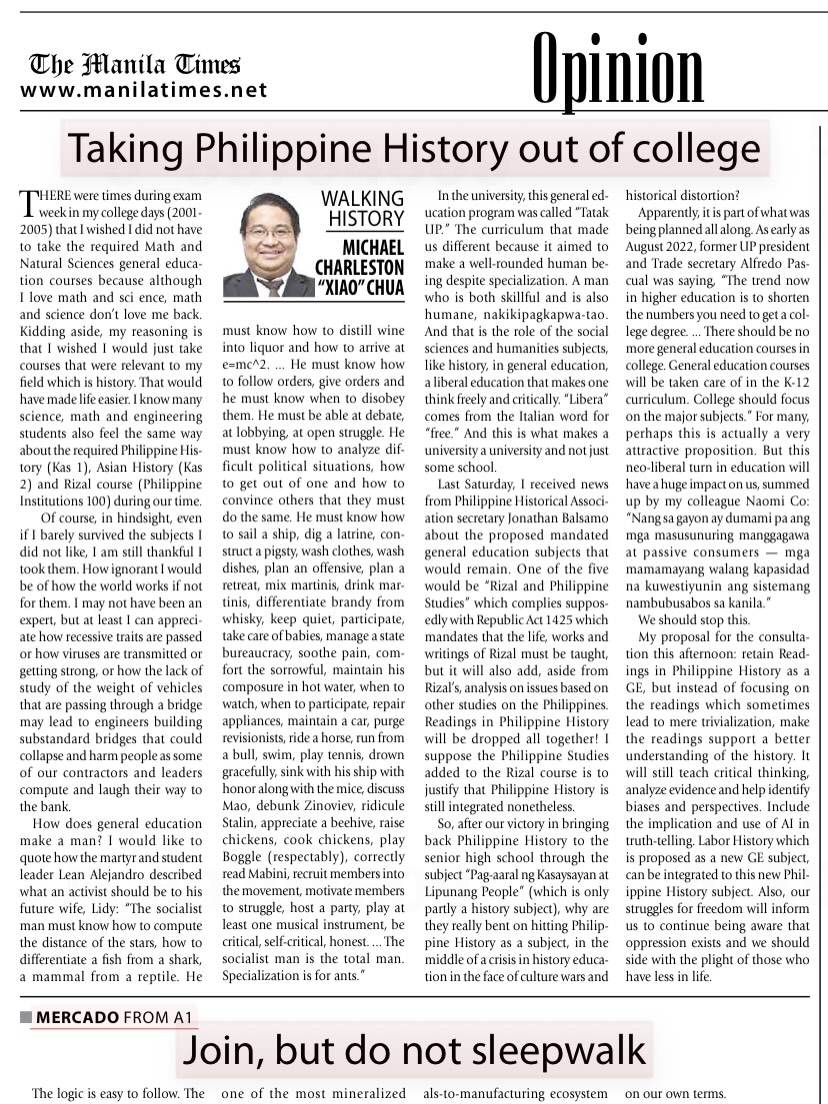
THERE were times during exam week in my college days (2001-2005) that I wished I did not have to take the required Math and Natural Sciences general education courses because although I love math and science, math and science don’t love me back. Kidding aside, my reasoning is that I wished I would just take courses that were relevant to my field which is history. That would have made life easier. I know many science, math and engineering students also feel the same way about the required Philippine History (Kas 1), Asian History (Kas 2) and Rizal course (Philippine Institutions 100) during our time.
Of course, in hindsight, even if I barely survived the subjects I did not like, I am still thankful I took them. How ignorant I would be of how the world works if not for them. I may not have been an expert, but at least I can appreciate how recessive traits are passed or how viruses are transmitted or getting strong, or how the lack of study of the weight of vehicles that are passing through a bridge may lead to engineers building substandard bridges that could collapse and harm people as some of our contractors and leaders compute and laugh their way to the bank.
How does general education make a man? I would like to quote how the martyr and student leader Lean Alejandro described what an activist should be to his future wife, Lidy: “The socialist man must know how to compute the distance of the stars, how to differentiate a fish from a shark, a mammal from a reptile. He must know how to distill wine into liquor and how to arrive at e=mc^2…. He must know how to follow orders, give orders and he must know when to disobey them. He must be able at debate, at lobbying, at open struggle. He must know how to analyze difficult political situations, how to get out of one and how to convince others that they must do the same. He must know how to sail a ship, dig a latrine, construct a pigsty, wash clothes, wash dishes, plan an offensive, plan a retreat, mix martinis, drink martinis, differentiate brandy from whisky, keep quiet, participate, take care of babies, manage a state bureaucracy, soothe pain, comfort the sorrowful, maintain his composure in hot water, when to watch, when to participate, repair appliances, maintain a car, purge revisionists, ride a horse, run from a bull, swim, play tennis, drown gracefully, sink with his ship with honor along with the mice, discuss Mao, debunk Zinoviev, ridicule Stalin, appreciate a beehive, raise chickens, cook chickens, play Boggle (respectably), correctly read Mabini, recruit members into the movement, motivate members to struggle, host a party, play at least one musical instrument, be critical, self-critical, honest…. The socialist man is the total man. Specialization is for ants.”Marcos and the US want Sara out. Will God nod?
In the university, this general education program was called “Tatak UP.” The curriculum that made us different because it aimed to make a well-rounded human being despite specialization. A man who is both skillful and is also humane, nakikipagkapwa-tao. And that is the role of the social sciences and humanities subjects, like history, in general education, a liberal education that makes one think freely and critically. “Libera” comes from the Italian word for “free.” And this is what makes a university a university and not just some school.
Last Saturday, I received news from Philippine Historical Association secretary Jonathan Balsamo about the proposed mandated general education subjects that would remain. One of the five would be “Rizal and Philippine Studies” which complies supposedly with Republic Act 1425 which mandates that the life, works and writings of Rizal must be taught, but it will also add, aside from Rizal’s, analysis on issues based on other studies on the Philippines. Readings in Philippine History will be dropped all together! I suppose the Philippine Studies added to the Rizal course is to justify that Philippine History is still integrated nonetheless.
So, after our victory in bringing back Philippine History to the senior high school through the subject “Pag-aaral ng Kasaysayan at Lipunang People” (which is only partly a history subject), why are they really bent on hitting Philippine History as a subject, in the middle of a crisis in history education in the face of culture wars and historical distortion?
Apparently, it is part of what was being planned all along. As early as August 2022, former UP president and Trade secretary Alfredo Pascual was saying, “The trend now in higher education is to shorten the numbers you need to get a college degree…. There should be no more general education courses in college. General education courses will be taken care of in the K-12 curriculum. College should focus on the major subjects.” For many, perhaps this is actually a very attractive proposition. But this neo-liberal turn in education will have a huge impact on us, summed up by my colleague Naomi Co: “Nang sa gayon ay dumami pa ang mga masusunuring manggagawa at passive consumers — mga mamamayang walang kapasidad na kuwestiyunin ang sistemang nambubusabos sa kanila.”
We should stop this.
My proposal for the consultation this afternoon: retain Readings in Philippine History as a GE, but instead of focusing on the readings which sometimes lead to mere trivialization, make the readings support a better understanding of the history. It will still teach critical thinking, analyze evidence and help identify biases and perspectives. Include the implication and use of AI in truth-telling. …Also, our struggles for freedom will inform us to continue being aware that oppression exists and we should side with the plight of those who have less in life.
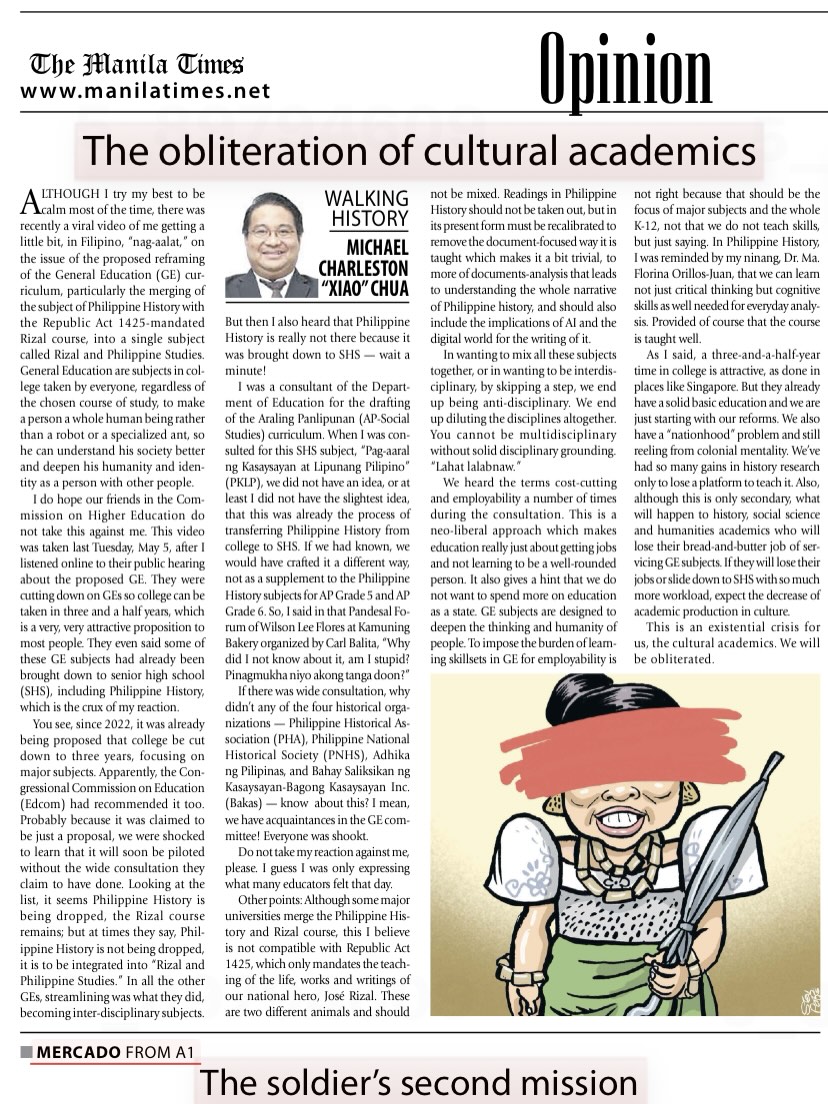
ALTHOUGH I try my best to be calm most of the time, there was recently a viral video of me getting a little bit, in Filipino, “nag-aalat,” on the issue of the proposed reframing of the General Education (GE) curriculum, particularly the merging of the subject of Philippine History with the Republic Act 1425-mandated Rizal course, into a single subject called Rizal and Philippine Studies. General Education are subjects in college taken by everyone, regardless of the chosen course of study, to make a person a whole human being rather than a robot or a specialized ant, so he can understand his society better and deepen his humanity and identity as a person with other people.
I do hope our friends in the Commission on Higher Education do not take this against me. This video was taken last Tuesday, May 5, after I listened online to their public hearing about the proposed GE. They were cutting down on GEs so college can be taken in three and a half years, which is a very, very attractive proposition to most people. They even said some of these GE subjects had already been brought down to senior high school (SHS), including Philippine History, which is the crux of my reaction.
You see, since 2022, it was already being proposed that college be cut down to three years, focusing on major subjects. Apparently, the Congressional Commission on Education (Edcom) had recommended it too. Probably because it was claimed to be just a proposal, we were shocked to learn that it will soon be piloted without the wide consultation they claim to have done. Looking at the list, it seems Philippine History is being dropped, the Rizal course remains; but at times they say, Philippine History is not being dropped, it is to be integrated into “Rizal and Philippine Studies.” In all the other GEs, streamlining was what they did, becoming inter-disciplinary subjects. But then I also heard that Philippine History is really not there because it was brought down to SHS — wait a minute!
I was a consultant of the Department of Education for the drafting of the Araling Panlipunan (AP-Social Studies) curriculum. When I was consulted for this SHS subject, “Pag-aaral ng Kasaysayan at Lipunang Pilipino” (PKLP), we did not have an idea, or at least I did not have the slightest idea, that this was already the process of transferring Philippine History from college to SHS. If we had known, we would have crafted it a different way, not as a supplement to the Philippine History subjects for AP Grade 5 and AP Grade 6. So, I said in that Pandesal Forum of Wilson Lee Flores at Kamuning Bakery organized by Carl Balita, “Why did I not know about it, am I stupid? Pinagmukha niyo akong tanga doon?”
If there was wide consultation, why didn’t any of the four historical organizations — Philippine Historical Association (PHA), Philippine National Historical Society (PNHS), Adhika ng Pilipinas, and Bahay Saliksikan ng Kasaysayan-Bagong Kasaysayan Inc. (Bakas) — know about this? I mean, we have acquaintances in the GE committee! Everyone was shookt.
Do not take my reaction against me, please. I guess I was only expressing what many educators felt that day.
Other points: Although some major universities merge the Philippine History and Rizal course, this I believe is not compatible with Republic Act 1425, which only mandates the teaching of the life, works and writings of our national hero, José Rizal. These are two different animals and should not be mixed. Readings in Philippine History should not be taken out, but in its present form must be recalibrated to remove the document-focused way it is taught which makes it a bit trivial, to more of documents-analysis that leads to understanding the whole narrative of Philippine history, and should also include the implications of AI and the digital world for the writing of it.
In wanting to mix all these subjects together, or in wanting to be interdisciplinary, by skipping a step, we end up being anti-disciplinary. We end up diluting the disciplines altogether. You cannot be multidisciplinary without solid disciplinary grounding. “Lahat lalabnaw.”
We heard the terms cost-cutting and employability a number of times during the consultation. This is a neo-liberal approach which makes education really just about getting jobs and not learning to be a well-rounded person. It also gives a hint that we do not want to spend more on education as a state. GE subjects are designed to deepen the thinking and humanity of people. To impose the burden of learning skillsets in GE for employability is not right because that should be the focus of major subjects and the whole K-12, not that we do not teach skills, but just saying. In Philippine History, I was reminded by my ninang, Dr. Ma. Florina Orillos-Juan, that we can learn not just critical thinking but cognitive skills as well needed for everyday analysis. Provided of course that the course is taught well.
As I said, a three-and-a-half-year time in college is attractive, as done in places like Singapore. But they already have a solid basic education and we are just starting with our reforms. We also have a “nationhood” problem and still reeling from colonial mentality. We’ve had so many gains in history research only to lose a platform to teach it. Also, although this is only secondary, what will happen to history, social science and humanities academics who will lose their bread-and-butter job of servicing GE subjects. If they will lose their jobs or slide down to SHS with so much more workload, expect the decrease of academic production in culture.
This is an existential crisis for us, the cultural academics. We will be obliterated.
To celebrate Sejiwa: The Spirit of Bandung at 70: A Hybrid International Conference on the Asian-African Conference of 1955.
Laurel Report: Mission To China By Senator Salvador H. Laurel Manila, April 1972, 185 pages
Reviewed by Xiao Chua in 2003.
This is basically the report by then Senator Salvador “Doy” Laurel to Senate President Gil J Puyat on the merits of his official journey to China on 12-22 March 1972, a few months before President Ferdinand Marcos’s declaration of Martial Law and the abolishment of the Senate. This is a very interesting document because it was an insider’s glimpse of how China and the Philippines dealt with each prior to the establishment of formal diplomatic relations with the People’s Republic Of China—both politically and culturally. In 1949, when the PRC was established, under American influenced, we broke our diplomatic ties with China, with the impression that Communism is against the principles of democracy. The book is also interesting as it touched many issues on China then that greatly affected Asian diplomacy even to this day.
On the invitation of the Chinese People’s Institute of Foreign Affairs, Laurel embarked on a journey to China accompanied by, among others, his lovely wife, Mrs. Celia Diaz-Laurel, who became his secret weapon as she became the diarist, photographer and interpreter in Mandarin! His mission: gather data and materials that would be useful to the re-opening of trade relations with China as the one and only committee member to make an observation tour of that country. Within his ten-day visit, he met various Chinese ranking officials. They planned to meet Premier Chou En Lai, but the contingent decided to leave on 21 March. Nevertheless, Laurel’s discussions with lower ranking Chinese officials were very substantive.
To understand Chinese foreign policy, one should know their five principles promulgated at the Bandung Conference (or the Pancha Sila), it’s their Bible in diplomacy: “1. Mutual respect for each other’s territorial integrity and sovereignty, 2. Mutual non-aggression, 3. Mutual non-interference in each other’s intern affairs, 4. Equality and mutual benefit equality and, 5. Peaceful co-existence.”[1] This could be seen with their statement, a direct attack on American imperialism,[2]
The People’s Republic of China will never be a superpower. We belong to the Third World. To be a superpower is to interfere with the affairs of other nations. To be a superpower is to dominate and control other nations. It means bullying weaker nations.[3]
China expressed their desire to resume diplomatic relations with the Philippines stating the fact that we’re really natural neighbors and that we’ve been friends for a thousand years and was only interrupted for 23 years. But before resuming relations, the Philippines should have a common view with them on the Taiwan issue. Laurel agreed with this saying that “the Two-China policy is unrealistic, deceptive and wishy-washy policy. Recognizing Taiwan as the government of China in effect means that Taipei is the seat of government of the 800 Million Chinese in the mainland.”[4]
The Philippines’ claim on the on the oil-rich Spratley Islands, also known as Freedomland, was also brought up in the discussions. According to the Chinese, they always regarded the islands as theirs, even called it Nansha Islands but said that it wasn’t yet the right time to talk about the issue because of the absence of diplomatic relations.[5]
Laurel asked if the anti-Maoist Anti-Subversion Law would be an obstacle in China-Philippine Relations. Take note that Mao Zedong was still alive at the time Marcos declared war to the communists in the Philippines for their adherence to the Marxist-Leninist-Mao Zedong thought.[6] The Chinese answered that it’s an “internal problem that is up to the Philippines to resolve.”[7]
About trading, the Chinese said that they could “trade only on an unofficial or non-governmental or people-to-people basis.”[8] (Italics supplied) They couldn’t deal with the government because of the absence of diplomatic relations, and to have diplomatic relations, it is crucial to do away with the Two-China policy.
Considering all that was said, Laurel recommended that the Philippines do away with the policy of fear and ignorance towards China and the policy of subservience towards America that hinders us to have diplomatic relations with China. That if we would like to trade with China as a nation we should agree that there is only One-China, and its Central government is in Beijing. Laurel said,
Philippine-China relations have hitherto been one of snobbery, if not outright hostility. Our two peoples have been separated by a curtain of ignorance and mistrust….[9] We should forget the prejudices of the past and look forward to the promise of the future…. Finally, we are making it known that, paraphrasing the words of the great Recto, “We shall make no enemy if we can make a friend.”[10]
And after a few years, the Philippines and China re-established their diplomatic relations, adapting the recommendations of Laurel.
The rest of the book contains their China Diary that dealt mainly with cultural exchange with their Chinese hosts, texts of declarations and conferences such as the US-China Joint Communique, export and import corporations of the PRC, a primer on China, and the text of the Chinese Constitution as amended in 1954.
The book was very indispensable if you want to know about the real and official stand of the Chinese government on issues three decades ago. That’s why interested China watchers should consult first this book, and compare it with Chinese policy now and you’ll see that the Chinese government had become consistent on many issues but changed a bit with how they would deal with the United States.
In my opinion, Laurel had been very effective as a diplomat with his choice of words. And the way he dealt with the Chinamen and the way he wrote the report were brilliant and very effective in convincing those concerned and in meeting his ends. We should learn from his example. For students of diplomacy, the Laurel Report: Mission To China is a must read.
-11 March 2003
[1] Laurel, Salvador H. Mission To China. ( Manila, April 1972), p. 75.
[2] Then—China is against the US and their brand of imperialism. Mao even called US a Paper Tiger. Now—China is taking a more friendly approach towards the US. A reporter once wrote that since Mao met with Nixon in Feb. 1972, “The two countries have learn since then that they are doomed to live with each other….” (Liu, Melinda. “In Love With A Vision.” Newsweek 20 September 1999, p. 40.)
[5] Yet, even with the establishment of diplomatic relations, the Spratley issue is everything but resolved. In 1994, China asserted its claim by building two concrete structures at Mischief Reef or Panganiban, an area being claimed by the Philippines. (Magno, Alex. “Naval Power Play Sets Off Alarms.” Time 27 Sept. 1999, p. 106.)
[6] But when Marcos visited Beijing, he told the Maoists,
I am confident that I shall leave inspired and encouraged in our own modest endeavor in the creation of a New Society for our people, for the transformation of China under the leadership of Chairman Mao Zedong is indeed the most noble monument to the invincibility of an idea supported by the force of human spirit. (Italics mine—quoted in Benigno S. Aquino, Jr., Testament From A Prison Cell (Makati: Benigno S. Aquino Jr. Foundation, Inc, 1984), p. 9.)
JOSE Rizal’s “El Filibusterismo” is a sequel to his first novel, “Noli me Tangere,” which Penguin Classics declared as the first major artistic manifestation of Asian resistance against European colonialism. Hence, both are important not only in the formation and imagineering of the Filipino nation but also in the story of anti-colonial and anti-imperialist struggle in our continent.
According to Floro Quibuyen, in his book “A Nation Aborted: Rizal, American Hegemony and Philippine Nationalism,” when Rizal was asked by his brother Paciano to go to Spain in 1882, he was told by his brother that “the principal purpose” of his trip was not just “to finish this [medical] course but to study other things of greater usefulness.” This implies that the creation of a study or a work representing the past and the present of the islands at that time was their main objective. Hence, the “Noli,” the “El Fili” and the historical annotations to the “Sucesos de la Islas Filipinas” of Antonio de Morga were really the fulfillment of Rizal’s dream project.
The historian Augusto de Viana pointed out to me that, looking at the manuscript of the Noli, one may notice Rizal’s signature handwriting was still flowing. To cut the cost of printing, he placed lines on the side of the ejected manuscript on Elias and his lover, Salome, but still readable. The story was more playful, more satirical. But the manuscript of the El Fili tells a different story; the flowing handwriting had become more pointed. At first, perhaps knowing he would have lots of paper, he was just using the front side. Eventually, he will use the back pages and will have so many ink erasures in the text, many times whole pages, that they will not be easily recoverable. It was an angrier novel, owing to the context of the Rizal family’s expulsion from the Calamba friar land in 1890, and the lack of funds owing to friends who promised support for the writing of the novel but did not fulfill them. His depression often made him want to burn the manuscript, but the novel was saved by the financial help of his Kapampangan friend Valentin Ventura, and the novel was published in Ghent, Belgium, in 1891.
Crisostomo Ibarra, Noli me Tangere’s protagonist, re-emerged as Simoun in El Filibusterismo. His main goal is to agitate the people to rise up against the Spanish colonizers, hence the term “filibuster,” which in the Spanish colonial context meant a rebel. Simoun eventually failed, and this was read by many as Rizal’s warning against a revolution, being a reformer and a pacifist. That the Fili was an anti-revolution novel. But reading José Alejandrino’s memoir, “The Price of Freedom,” Rizal perhaps had a different message. Being his roommate in Belgium while finishing the novel, Rizal reportedly told him, “… I regret having killed Elias instead of Crisostomo Ibarra; but when I wrote the Noli Me Tangere, my health was badly broken and I never thought that I would be able to write its sequel and speak of a revolution. Otherwise, I would have preserved the life of Elias, who was a noble character, patriotic, self-denying and disinterested — necessary qualities of a man who leads a revolution — whereas Crisostomo Ibarra was an egoist who only decided to provoke the rebellion when he was hurt in his interests, his person, his loves, and all other things he held sacred. With men like him, success cannot be expected in their undertakings.” (1) Rizal was not totally anti-revolution. As Rizal’s great-grandniece Gemma Cruz Araneta puts it, “It is a novel on how not to wage a revolution” if it is only about selfish interests.
The public historian José Victor Torres had another insight from his paper “A la Juventud de Filibusteros” (an allusion to Rizal’s poem “A la juventud Filipina”), that the author may be alluding to another revolution in the title of the novel, not a bloody one, but the one initiated by young people in the universities like Basilio and Isagani. A peaceful revolution through education.
But Rizal, through Simoun, had a warning: “A, kayong mga kabataan! Nanaginip pa rin kayo!… Gusto n’yong maging mga Kastila din kayo, pero hindi n’yo nakikitang ang pinapatay n’yo ay ang inyong pagkabansa! Ano ang inyong magiging kinabukasan? Isang bansang walang pagkatao at kalayaan? Lahat sa inyo ay hiniram, pati na ang inyong mga depekto. Mamamatay kayo bago pa man dumating ang inyong kamatayan!”
(2) It should be a truly Filipino education that makes us love our country, a love that will make us give our efforts for her, as Rizal wrote thus in the novel, “It is a useless life that is not consecrated to a great ideal. It is like a stone wasted on the field without becoming part of any edifice.”
May you be inspired to contribute your own stone just as Rizal did, not ghost flood control projects.
The Manila Times, Walking History Column by Xiao Chua
July 1, 2025
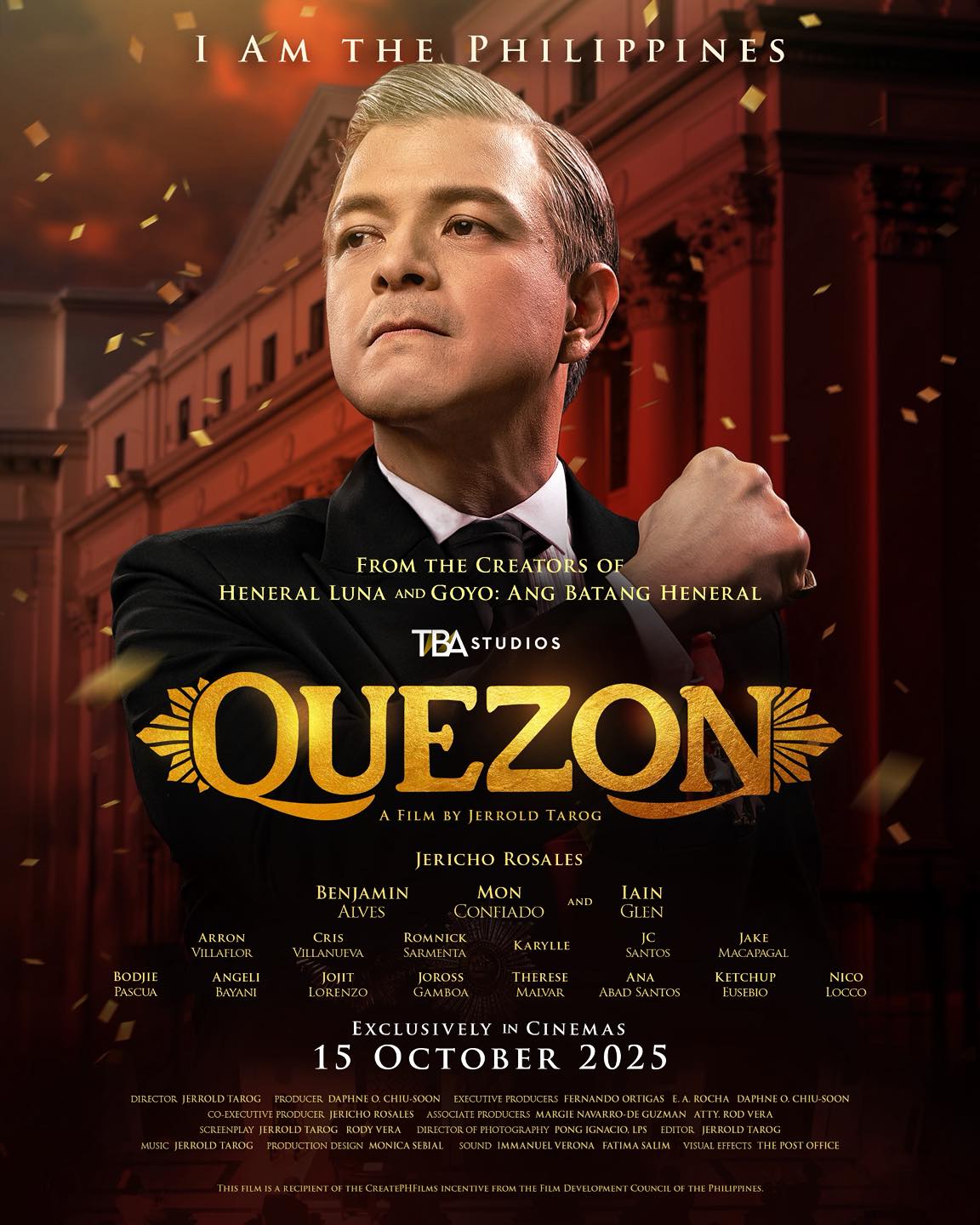
SOON, Jerrold Tarog’s “Quezon” will come out in the cinemas, the third installment in the ‘bayaniverse’ of TBA Studios. Since the first film, “Heneral Luna” in 2015 and “Goyo: Ang Batang Heneral” in 2018, Dakila, a collective promoting Filipino heroism, has been tapped to conduct a nationwide tour to promote the films under the project “Bayani Ba ‘To” (which alludes to heroes as monuments but also to a question about their heroism), where historians like John Ray Ramos, Alvin Campomanes, Natasha Kintanar and myself lead the discussions. The warts-and-all approach of the films makes them more appealing than the almost hagiographic approach to the teaching of heroism.
Last June 23, 2025, the historians, Dakila and a representative of TBA met to consolidate our insights on how to contextualize “Quezon” (without spoilers).
Answering the question, “Was President Manuel Quezon a bayani?” is more complicated than perhaps asking, “What was his contribution to Philippine history and to us Filipinos?” Arguably, Quezon is the “Architect of the Modern Philippine State.” And he was able to do it because, as a pioneer actual national leader of the country, he assumed a cultural role familiar to the people, a “datu,” whose role in indigenous society is to distribute “karangalan” (honor) and “kaginhawaan” (well-being) and was also the chief bagani (warrior). When the Spanish colonizers came, the datu class became the principalia class, who became the bridge between the people and the colonial masters. The survival of the system rests on negotiating with the colonizer in order to continue governing and providing for the people. This continued when certain elites were given favor by the American imperialists.
Add to this mix, according to fellow Manila Times columnist Van Ybiernas, the fact that a whole generation of potential heroic leaders was wiped out during the Philippine Revolution, like José Rizal, Andres Bonifacio, Marcelo H. del Pilar, Emilio Jacinto, etc. Those who remained in the same patriotic spirit when the Americans came, like Macario Sakay, were wiped out too. That nationalist route would lead to death. And so, Quezon’s generation figured that they should creatively show nationalism in front of the people while patronizing the Americans for survival.
This is the reason why Quezon was described as “janus-faced”: He said one thing to the people, and another to the elite and the imperialists. And since the Americans were the only colonial power to promise independence to their subjects as the Jones Law was passed, nationalism and loyalty to America had no contradiction. This is how Quezon helped create a nation in the face of American imperialism: He had to have transactional relations with the elite and the Americans so he could provide for his people. In his imaging (“papogi”), he created a cult of personality, the heroic datu who facilitates “kaginhawaan,” which is the basis of the patronage politics in our present society.
So yes, there were the two sides of Quezon. The one who told his daughter Zeneida, or Nini, “Never forget the poor.” He was the visionary who put forward “social justice” as the banner cry of his leadership, that there should be a preferential option for the poor. He was radical in his empathy and inclusivity in allowing the women’s vote and the adoption of a national language. He demonstrated the Filipinos’ “kapwa” culture by implementing the eight-hour day and minimum wage, housing projects, and championed human rights by not implementing the death penalty, believing that no Filipino should beg for his life in his administration, and by rescuing 1,300 Jews from the Holocaust.
But he also institutionalized a traditional, patriarchal, transactional populist system which continued colonial dependency and elite democracy. This is Quezon’s contradictory legacy for good (and for bad). I guess we should give credit to where credit is due but also learn from his faults.
His batchmate, Emilio Jacinto, wrote, “Let us seek the light and do not let us be deceived by the false glitter of the wicked.” So, I will leave it to you to answer if Quezon was indeed a bayani. But I would like to end with a quote which Quezon was heard to have said toward the end of his life in reference, I believe, to Sergio Osmeña, his vice president: “Look at that man, why did God give him such a body when I am here struggling for my life? I am Manuel L. Quezon — I am the Filipino people, I am the Philippines.”
Truly, he once represented the Philippines, but now we always mistake loyalty to the leader as loyalty to the country and criticizing the leader as being disloyal to the nation. We have always depended on leaders and strongmen as our heroes. We always ask the question “Bayani ba ‘to?” But the hero we are looking for might be the image in front of us when we look at the mirror: “I am the Philippines, tayo ang Pilipinas, tayo ang bayan, tayo dapat ang bayani.”
“Pero bayani ba talaga tayo?” Let this be both a call for action and an aspiration. We are the Philippines. We have the power to change our country.
What is the way forward for historians and public history in today’s increasingly polarized climate? Michael Charleston “Xiao” Chua explores the question and revisits the role of history in our national life.
Xiao Chua, by Greg Mayo
When talking about history as a public historian, some say I should be totally objective and be non-political. But can it be divorced from politics? Aristotle himself said, “man is a political animal” and that “every man, by nature, has an impulse toward a partnership with others,” Historian Teodoro Agoncillo echoed the sentiment, saying, “No true historian can disengage himself from the object of his study, for he is too much of a human being to repel his own nature.”
While some people who believe historical discourse should be confined to the academe to remain scholarly, even before academia was invented or introduced in this country, historical discourse had always been “public.”
If we take into account historian Zeus A. Salazar’s analysis of our native word for “history,” i.e. “kasaysayan”—the root word “saysay” translates to both story and relevance—we can say that the precursor of historical discourse came from the epics and myths chanted by the babaylanes, local religious leaders, healers and storytellers; and the binukots or the community maidens. Their stories united the community; the oral traditions, while not always factual, reflected their real beliefs, characteristics, and aspirations. When the “bayan” or the community listened to stories of the past, they would feel that they were one people, sharing the same past and future, journeying the same boat.
That is why the orality of “chismis,” where writing was only prevalent to our ancestral elites, can actually be part of historical analysis, not as a measure of factuality of events, but of mentalities of those who shared the oral stories.
When the Spanish colonizers came, they showed us a bipartite view of history in their chronicles. There they described our lives before the conquista as dark, uncivilized, and without progress, with them introducing us to the “maravillosa civilizacion christiana” (Wonderful Christian Civilization). Despite our dynamic culture syncretising with Catholic culture, we came to depend on Spain as the giver of enlightenment, which helped subjugate us.
The Spanish writer José Felipe del Pan urged Filipinos to write history in their own perspective. Father José Burgos, Pedro Paterno, Isabelo de los Reyes and eventually José Rizal, T. H. Pardo de Tavera and many others will make studies on our ancestors and develop what Zeus Salazar would call the legacy of the Propaganda Movement—“the Tripartite View of History.” That is: before colonialism, our ancestors were progressive and had an elaborate civilization, and then colonialism came and there was darkness. They used history to campaign to Spaniards for the third part of history: A life of “kaginhawahan” because the colonizers reformed Las Filipinas.
Although La Propaganda politically failed, its writings gave a sense of oneness and nationhood to the Filipino reading elite. But Andres Bonifacio, the Father of the Filipino Nation, will appropriate the tripartite view of history and write in his people’s language in the 1890s to urge his compatriots to fight and die to give birth to the aspired nation in “Ang Dapat Mabatid ng mga Tagalog.” The national sentiment was fostered among many, such that thousands of Filipinos rose in 1896 to fight for independence during the Philippine Revolution and established their own national governments, the Haring Bayang Katagalugan headed by Bonifacio as President, an indigenous concept of nation that goes back to our Austronesian maritime historical roots (taga-ilog), and subsequently, the first constitutional democratic republic in this continent, the Republica Filipina headed by Emilio Aguinaldo, established in 1899.
When the Americans came, their sentimental imperialism wanted them to be the best imperialists, to win the hearts and minds of the Filipinos. They hired researchers, headed by Emma Helen Blair and James Alexander Robertson, who translated all available Spanish documents showing our history before and during colonialism and they came up with a 55-volume work The Philippine Islands 1493-1898 (also known as the Blair and Robertson). Boy, oh boy, the Americans knew our soft spots. Despite the bloody Philippine-American War, the way they framed the public school system as their heritage despite giving us a colonial education, made us look favorably towards them to this day.
After the revolution and on the onset of the 20th century, the careers of politicians and former revolutionary leaders were at stake as they invoke the names and images of national heroes, battling the spotlight in newspapers about their version of history. Manuel Quezon, Jose P. Laurel, among others, used it to rally people in their campaign for independence.
After the Second World War, veterans and many Filipinos used the commemorations of that war to remind the US of how we fought together as partners and ask for rightful reparations and compensation. On the other hand, nationalist politicians like Claro M. Recto, and subsequently nationalist historians Teodoro Agoncillo and Renato Constantino would use history to remind us of American neo-colonialism that continued even after independence. This kind of historiography will even be used by rebels and revolutionaries as Amado Guerrero (José Ma. Sison) in his book Philippine Society and Revolution, to remind people to take the cause of the oppressed.
Strongman Ferdinand E. Marcos knew the power of history and culture, using it to justify his 20-year rule, from proliferating the ancient myth of the “Malakas and Maganda” (reincarnated to Ferdinand and wife Imelda) and the Ilocano folk hero Lam-ang (in the epic reincarnated by a person named Marcos), to commissioning historians to write a multi-volume work titled Tadhana: The Story of the Filipino People under his by-line and authorship (notably still the best work on the 16th to 18th century Philippines). Marcos also rekindled the ancient barangay leadership and shaped himself to become the modern datu, or even, the modern Kalantiyaw (although eventually this ancient lawgiver was exposed to come from a hoax).
The memory of the people’s revolution of 1986, also known as EDSA People Power, was invoked by many of its participants to advance their political gain. Many human rights advocates also used it to advance consciousness on the importance of democratic rights. This time of soul searching also strengthened the movement to indigenize Philippine History in the academe such as the Pantayong Pananaw by its adherents headed by Zeus A. Salazar, as the nation moved forward to its 100th birthday in 1998. Such commemorations paved the way for an explosion of public history in the media, including the television show Bayani.
The election of Noynoy Aquino in s2010 rekindling the memory of People Power was expected to institutionalize this perspective of history, yet the guy had much delicadeza. Except in official commemorations, the PNoy team avoided making self-serving histories using the people’s money. Manolo Quezon’s team in the Presidential Communications Office, instead of edifying the people power narrative, went back to the basics and sorted out our political history by digitizing and putting out Philippine institutional papers and photographs for the people to have a basic official history in the Official Gazette. From 2012 to 2017, the government station PTV4 also launched the TV segment Xiao Time.
Beginning in 2011, a deliberate attempt to attack the People Power narrative and restore the luster of the Marcos name seemed underway in social media. By strategically aligning themselves to the popular Rodrigo Duterte, the pro-Marcos propaganda machine touched on the fears, frustrations and aspirations of the people and used sensational language to sow division in the nation and galvanized those frustrated with the democratic institutions. This paved the way to the election of Ferdinand “Bongbong” Romualdez Marcos, Jr. as president.
What is the way forward for historians and public history in such a climate? Agoncillo also wrote that, “though history is not objective, it must nevertheless be impartial. Impartiality implies the moral responsibility of a historian to weigh the pieces of evidence and to derive just conclusions therefrom.” One can have a political stand but can also be fair. Perspectives and judgments are a must in studying history but methodology and fairness lessen biases.
History has always been a battlefield; we cannot undo that. But to borrow Canadian historian Margaret MacMilan’s words, we should always be aware of the “uses and abuses of history.”
We will further polarize the nation if we will be too intolerant. We must allow many perspectives, yet we should uphold the importance of evidence. Because, as we can see with the ancient babaylan, the role of history and of the storyteller is to edify and unify the nation with stories that inspire them to be better Fiipinos. History can be used to enslave us with rage, but we aspire for a history that inspires, liberates and empowers the people.
In a time when some wants us to forget, it is courageous to remember and remind people that history should be the story of liberty.